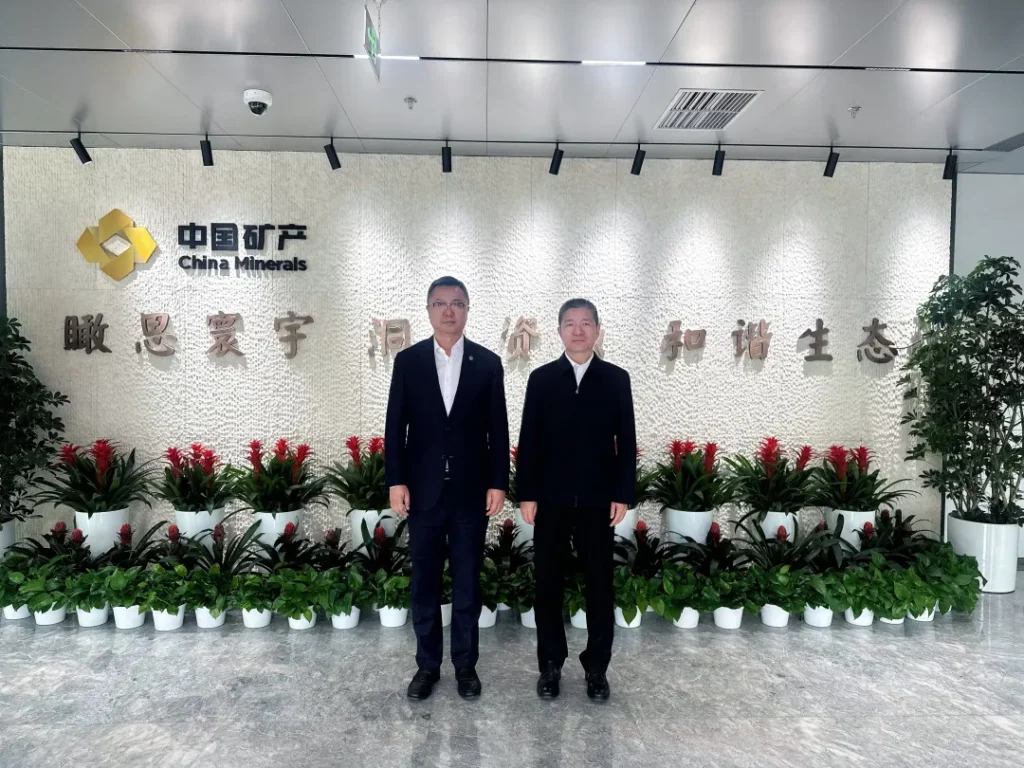
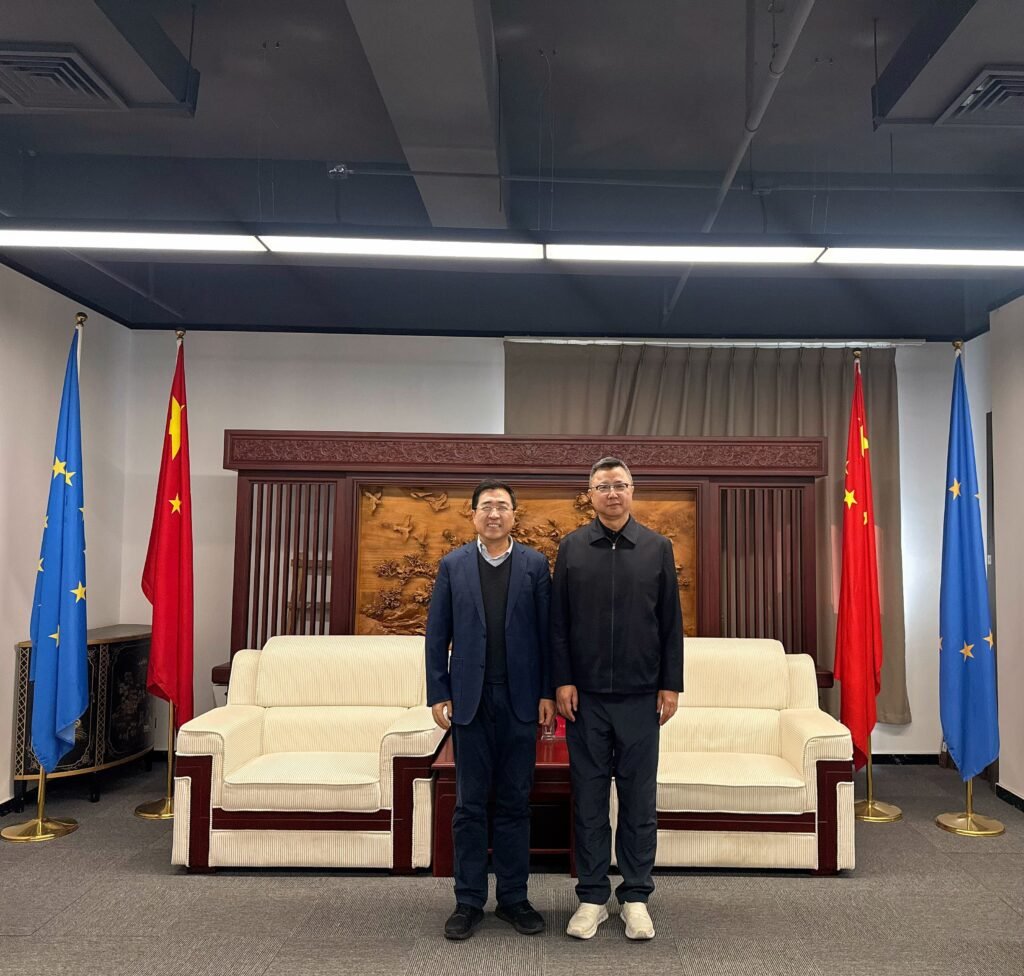
On the afternoon of March 31, Pan Feng, President of ECECDC, held a working meeting with Yao Lin, Chairman of China Mineral Resources Group Co., Ltd. The two sides conducted in-depth exchanges on issues including the security of mineral resources supply, industrial chain coordination, and central–local cooperation, and jointly explored pathways for cooperative development.
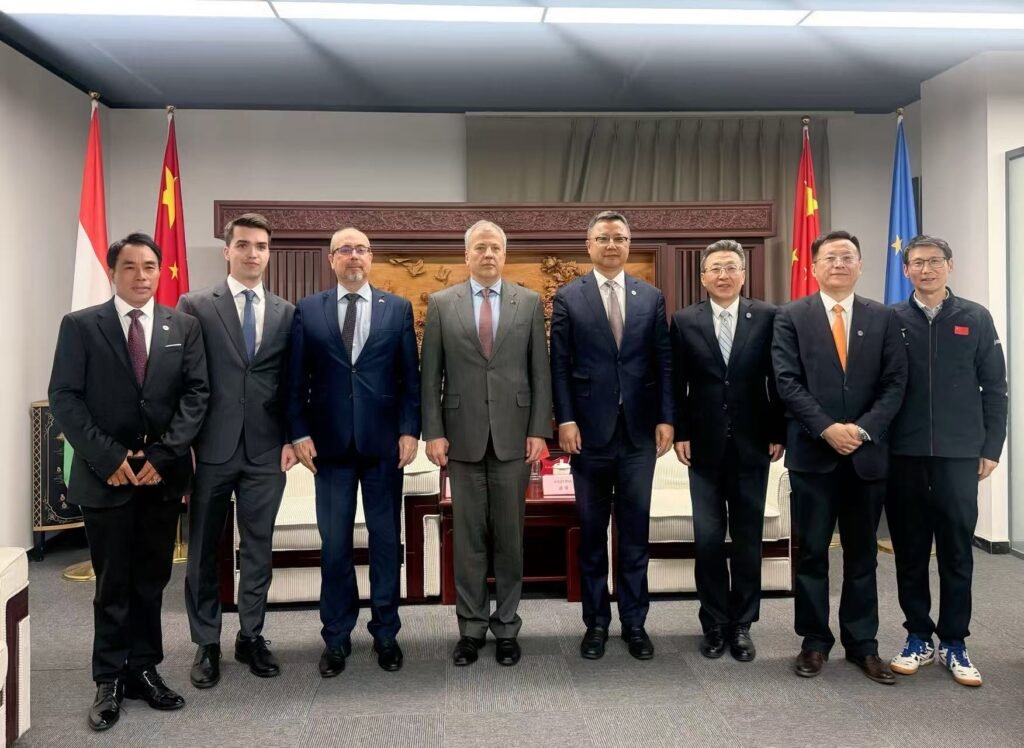
On March 28, President of ECECDC, met in Beijing with Lajos Olah, Deputy Speaker of the Hungarian National Assembly, and his delegation, and held a working meeting. The two sides conducted in-depth exchanges on China–Hungary economic and trade relations, two-way investment cooperation, and industrial and supply chain connectivity. They reached broad consensus on further leveraging their respective strengths, building more platforms for practical cooperation, and promoting the sustained and stable development of bilateral economic and trade relations.
On March 26, 2026, Lajos Oláh, Co-Chairman of the Europe-China Economic Cooperation and Development Council (ECECDC) and Deputy Speaker of the Hungarian National Assembly, met with Xiao Jie, Vice Chairman of the Standing Committee of the National People’s Congress, in Beijing.
The two sides held in-depth exchanges on issues of mutual interest, including further consolidating and advancing the traditional friendship between China and Hungary, strengthening exchanges and cooperation at all levels between the two countries’ legislative bodies, and deepening practical cooperation in key areas such as economy and trade, people-to-people exchanges, and science and technology. They also reached broad consensus on further deepening China-Hungary friendly cooperation.
From March 23 to 26, 2026, Lajos Oláh, Co-Chairman of the ECECDC and Deputy Speaker of the Hungarian National Assembly, led a delegation on a visit to Fuzhou, Xiamen, and Zhangzhou in Fujian Province, accompanied by officials from the Foreign Affairs Bureau of the Hungarian National Assembly and the Hungarian Consulate General in Guangzhou.
During the visit, Zhou Zuyi, Secretary of the CPC Fujian Provincial Committee and Director of the Standing Committee of the Fujian Provincial People’s Congress, met with Lajos Oláh and his delegation in Fuzhou, providing a detailed introduction to Fujian’s development advantages, its opening-up strategy, and key areas for cooperation.
Lajos Oláh said he was delighted to visit Fujian again. He noted that Hungary and Fujian share a deep-rooted foundation of friendly exchanges and enjoy vast potential for cooperation. He expressed hope that the two sides would identify more areas of common interest and deepen practical cooperation in economic and trade investment, ecological conservation, culture and tourism, and education and training, so as to achieve more tangible results and mutually beneficial outcomes.
From March 20 to 23, 2026, Lajos Oláh, Co-Chairman of the Europe-China Economic Cooperation and Development Council (ECECDC) and Deputy Speaker of the Hungarian National Assembly, met with Zhuang Jianqiu, Mayor of Zhengzhou, Henan Province, during his visit to Zhengzhou. The two sides held friendly discussions on further deepening exchanges and cooperation and achieving mutually beneficial development.
Lajos Oláh expressed his appreciation for the achievements Zhengzhou has made in economic and social development. He said that although Hungary and China are separated by great distances, the friendship between the peoples of the two countries has a long history, and bilateral relations have become increasingly close. As an important central city in central China, Zhengzhou has maintained strong development momentum in recent years, providing a solid foundation and broad prospects for deepening exchanges and cooperation between Hungary and Zhengzhou. Under the guidance of the China–Hungary All-Weather Comprehensive Strategic Partnership for the New Era, efforts will be made to further align Hungary’s Eastern Opening Strategy with the Belt and Road Initiative, strengthen practical cooperation with Zhengzhou in such fields as air and rail freight transport, education, culture, and tourism, support the development of the China–Hungary (Zhengzhou) International Cooperation and Industrial Technology Application Demonstration Center, establish closer cooperative and exchange relations, continuously elevate the level of exchanges and cooperation, achieve more practical outcomes, and jointly promote new progress in China–Hungary relations.
From March 20 to 23, 2026, Lajos Oláh, Co-Chairman of the Europe-China Economic Cooperation and Development Council (ECECDC) and Deputy Speaker of the Hungarian National Assembly, led a five-member delegation on a visit to Henan Province. The delegation was accompanied by officials from the Foreign Affairs Directorate of the Hungarian National Assembly and relevant departments of the Embassy of Hungary in China.
During the visit, the delegation toured and held discussions at the Fourth Engineering Company of China Construction Fifth Engineering Division Corp., the International Main Cargo Terminal at the North Cargo Area of Zhengzhou Airport, Zhongyu Aviation Group, Central Plains Longhao Airlines, the China–Hungary (Zhengzhou) International Cooperation and Industrial Technology Application Demonstration Center, Mixue Group, as well as the Shaolin Temple and the Dengfeng Epo Wushu School. Through the visits and exchanges, the delegation gained an in-depth understanding of Henan’s economic and social development and experienced firsthand the close exchanges and cooperation between Henan and Hungary, as well as the broad prospects for future cooperation.
Lajos Oláh spoke highly of China–Hungary relations and bilateral economic and trade cooperation, and expressed his appreciation for Henan’s achievements in economic and social development. He pointed out that Henan and Hungary share similar geographical advantages and enjoy broad prospects for cooperation. In recent years, with the continuous expansion of the Zhengzhou–Budapest cargo air route and increasingly frequent people-to-people exchanges, the ties between the two sides have grown even closer. He expressed the hope that cooperation in such fields as culture and education would continue to yield fruitful results in the future.
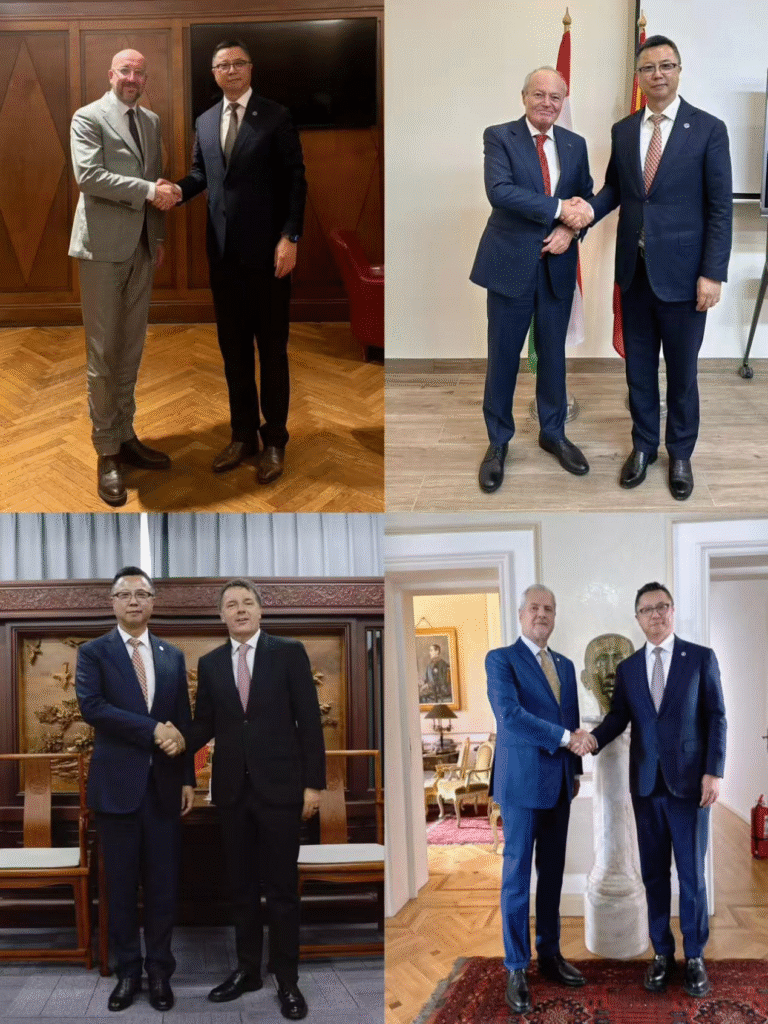
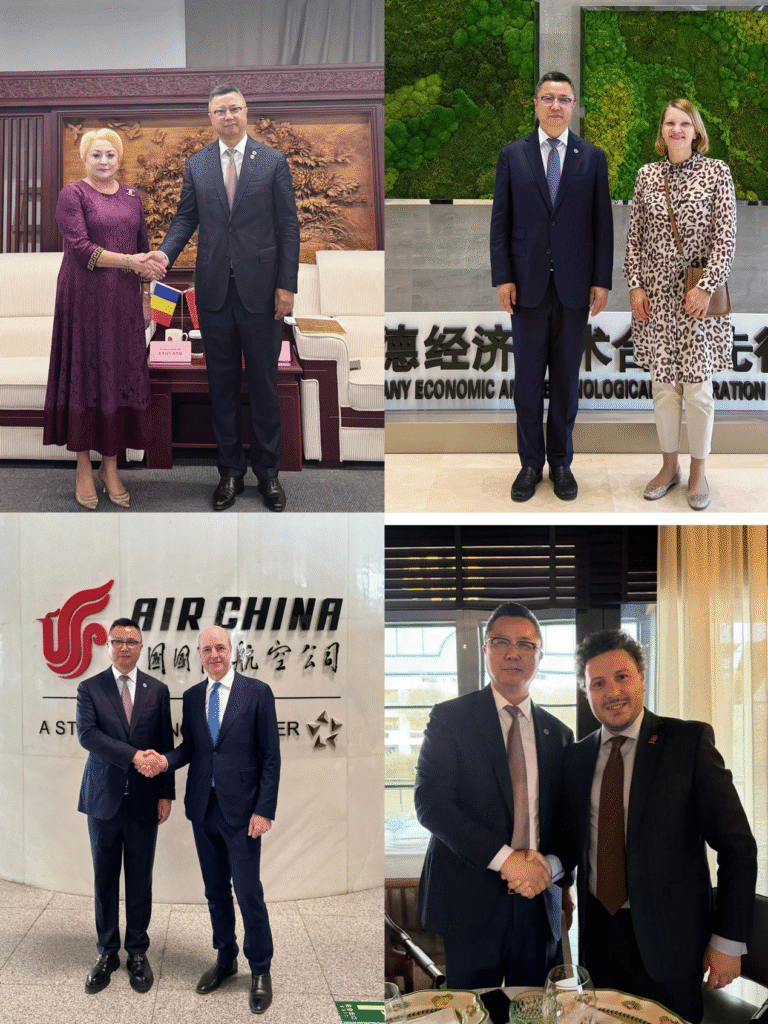
During the establishment of the Europe–China Economic Cooperation and Development Council (ECECDC), Pan Feng, President of the Council, held meetings and discussions with a number of former European leaders, including former President of the European Council Charles Michel, former Prime Minister of Hungary Péter Medgyessy, former Prime Minister of Italy Matteo Renzi, former Prime Minister of France Michel Barnier, former Prime Minister of Romania Adrian Năstase, former Prime Minister of Romania Viorica Dăncilă, former Prime Minister of Finland Mari Kiviniemi, former Prime Minister of Sweden Fredrik Reinfeldt, and former Prime Minister of Montenegro Dritan Abazović. The participants conducted in-depth exchanges on topics including strengthening Europe–China economic and trade cooperation, expanding exchanges across multiple sectors, and jointly addressing global development challenges, while building broad consensus on future cooperation.
Top left: Former President of the European Council Charles Michel Top right: Former Prime Minister of Hungary Péter Medgyessy Bottom left: Former Prime Minister of Italy Matteo Renzi Bottom right: Former Prime Minister of Romania Adrian Năstase
Top left: Former Prime Minister of Romania Viorica Dăncilă Top right: Former Prime Minister of Finland Mari Kiviniemi Bottom left: Former Prime Minister of Sweden Fredrik Reinfeldt Bottom right: Former Prime Minister of Montenegro Dritan Abazović
During the discussions, all participants highly commended the establishment of ECECDC, noting that its creation carries far-reaching significance and provides an important platform for dialogue and cooperation between Europe and China. Pan Feng introduced the original vision and development goals of the Council, noting that Europe and China, as important forces promoting global multipolarity and two major markets supporting economic globalization, share a strong foundation for cooperation and broad prospects for future development. He emphasized that the Council will place practical cooperation at its core, actively building bridges of mutual trust and connectivity between Europe and China, exploring diverse forms and areas of collaboration, and contributing to the advancement of Europe–China economic and trade cooperation toward a higher level and higher quality.
Former European leaders from various countries also expressed strong willingness to deepen cooperation between Europe and China. They acknowledged the vitality and potential of China’s economic development, as well as the new opportunities created by new quality productive forces for Europe–China cooperation. They noted that there is extensive room for collaboration in areas such as new energy manufacturing, sustainable development, and industrial synergy. All parties expressed hope that the establishment of the Council will serve as an opportunity to further strengthen exchanges between European and Chinese civil societies, governments, and business communities, thereby injecting new momentum from Europe and China into the stability and development of the global economy.
The Europe–China Economic Cooperation and Development Council (ECECDC) was officially established in Spain in May 2024, with former Prime Minister of Spain José Luis Rodríguez Zapatero serving as its Founding Chairman. The Council aims to promote more positive and effective cooperation between Europe and China at multiple levels of society and to support both sides in becoming key contributors to global peace, cooperation, and shared progress.
On the morning of March 6, Pan Feng, President of ECECDC, held a working meeting with Feng Zhongping, Director of the Institute of European Studies at the Chinese Academy of Social Sciences. The two sides conducted in-depth exchanges of views on topics including the current situation in Europe, the development of China–EU relations, practical China–EU economic and trade cooperation, and enhanced coordination between think tanks and industry associations, reaching a number of shared understandings.
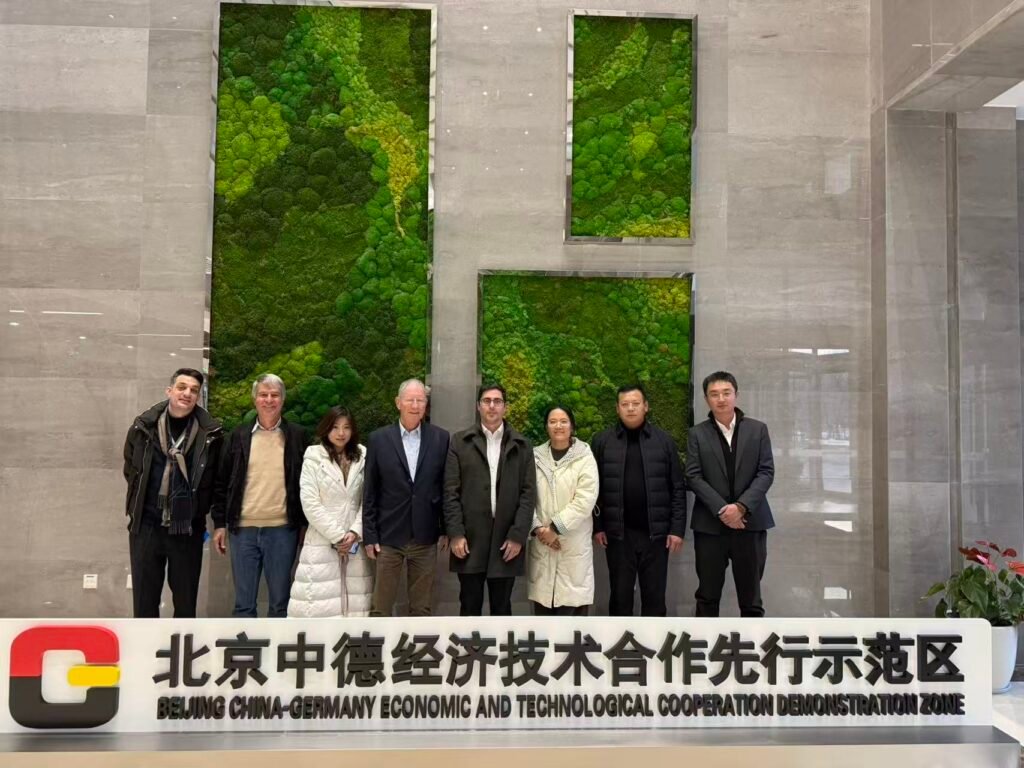
On January 29, 2026, Ivan, Secretary-General of the Europe–China Economic Cooperation and Development Council (ECECDC), led a European business delegation to conduct a study visit in Shunyi District, Beijing, focusing on biomedicine and innovation cooperation. The delegation visited the Airport Biomedical Industrial Park and the Beijing China-Germany Industrial Park, where they toured exhibition halls and received briefings on the development of Shunyi’s pharmaceutical and healthcare sector as well as the planning and progress of the parks. The delegation gained a comprehensive understanding of the parks’ industrial layout, innovation ecosystem, and international cooperation environment.
At a subsequent symposium, both sides held thematic presentations and interactive discussions on cutting-edge projects, including bacterial elimination technologies. In-depth exchanges were conducted on issues such as pathways for technology commercialization, conditions for industrial implementation, and Europe-China collaboration between scientific research and industry. Relevant officials from the Beijing China-Germany Demonstration Zone and Airport Development also participated in the event. The visit laid a solid foundation for further advancing pragmatic cooperation between China and Europe in the fields of biomedicine and scientific and technological innovation.