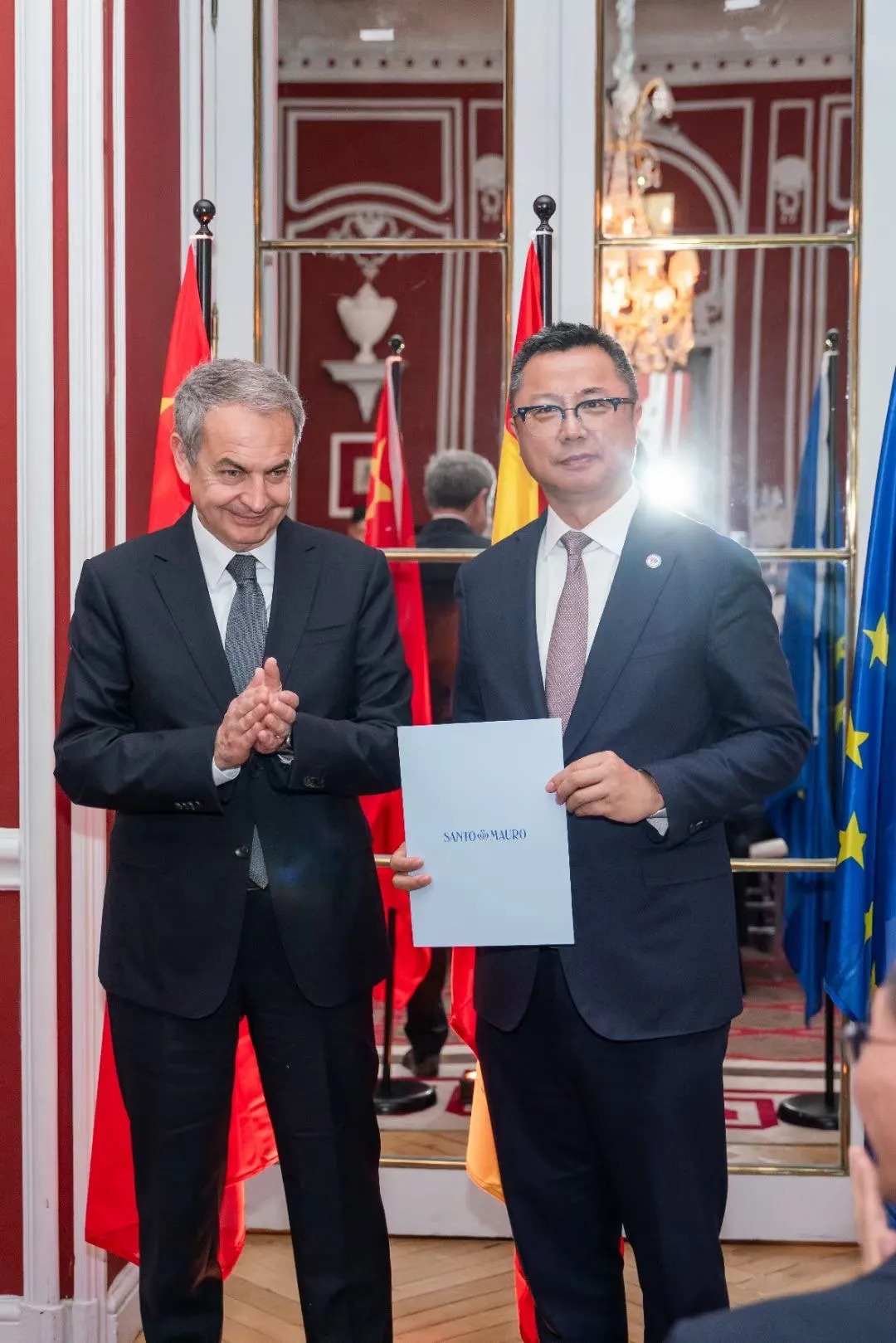
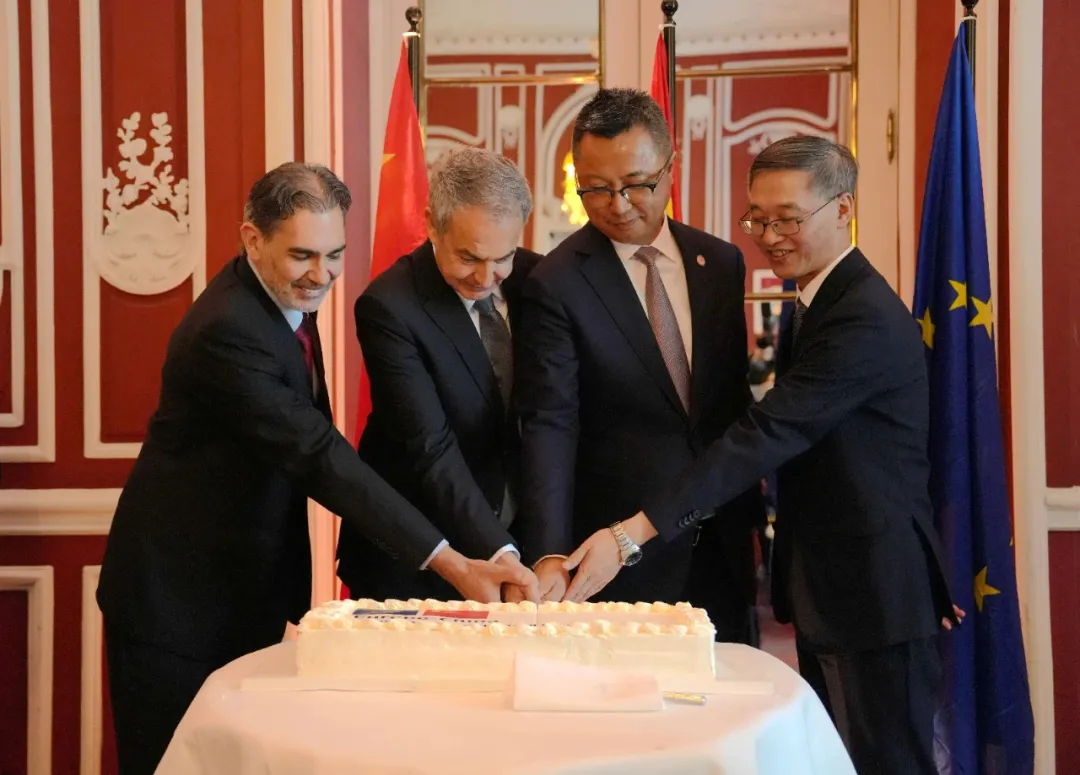
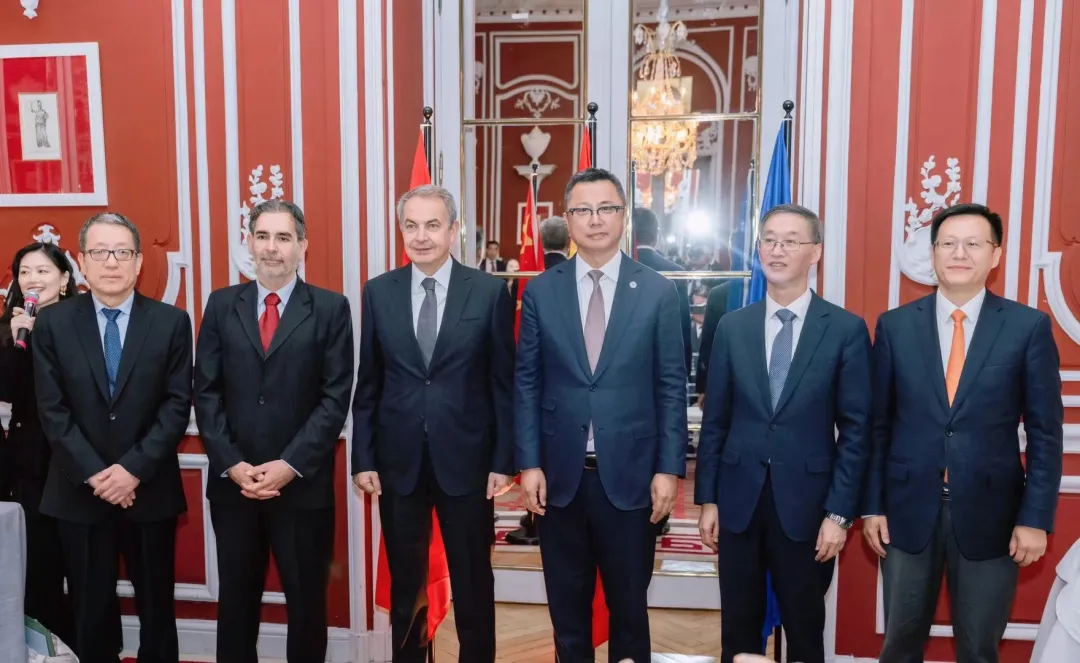
On the afternoon of May 21 local time, the China-Spain Business Conference was successfully held in Madrid. Former Spanish Prime Minister Jose Luis Rodriguez Zapatero, Chinese Ambassador to Spain Yao Jing, and Vice Chairman of CEATEC Pan Feng attended the meeting and delivered speeches. The conference announced the establishment of the Europe-China Economic Cooperation and Development Council, with Jose Luis Rodriguez Zapatero serving as the founding Chairman, and Pan Feng as the President. More than 60 representatives from Chinese and Spanish enterprises attended the meeting.
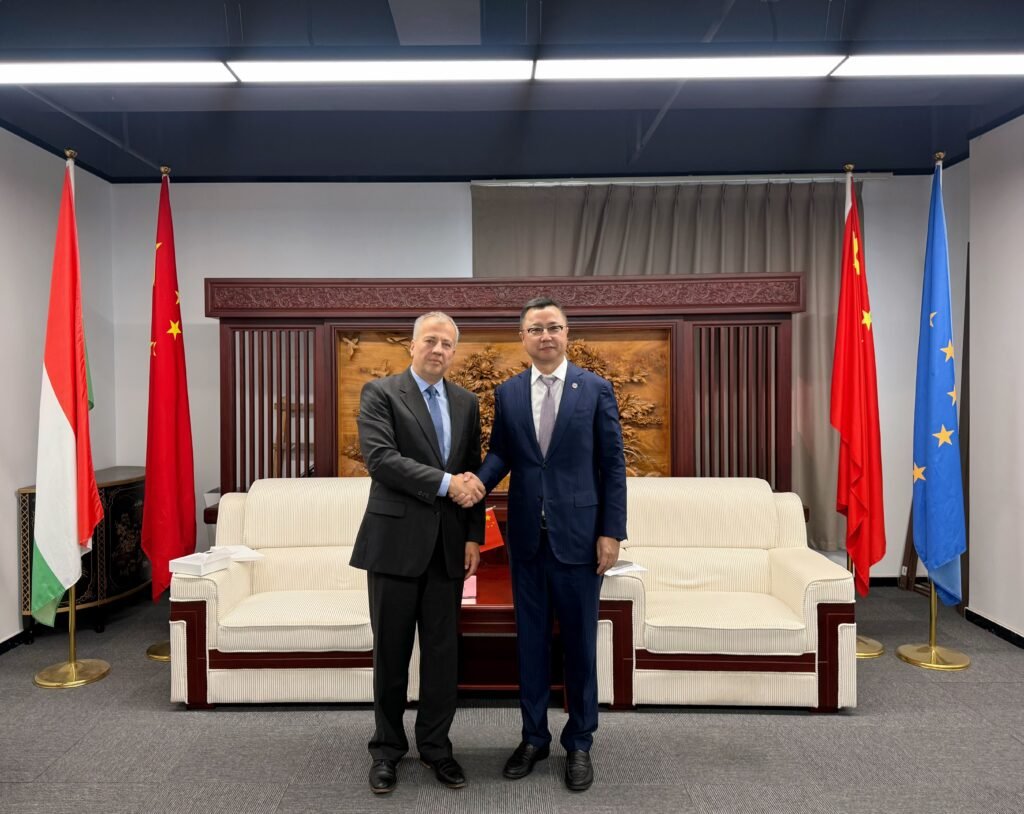
On October 10, Pan Feng, Vice Chairman of CEATEC and Chairman of ECECDC, met with Óla Lajos, former Deputy Speaker of the Hungarian National Assembly and Co-Chairman of ECECDC, in Beijing. The two sides held in-depth exchanges on priority areas including China-Hungary economic and trade cooperation, reciprocal business delegations, new energy, high-end manufacturing and healthcare. The meeting further smoothed communication channels for China-Europe government-enterprise engagement and consolidated the foundation for bilateral industrial cooperation. Deng Xin, General Director of the Shunyi District Investment Promotion Center, Beijing, and Sun Kui,General Director of CEATEC-EUWC, attended the meeting.
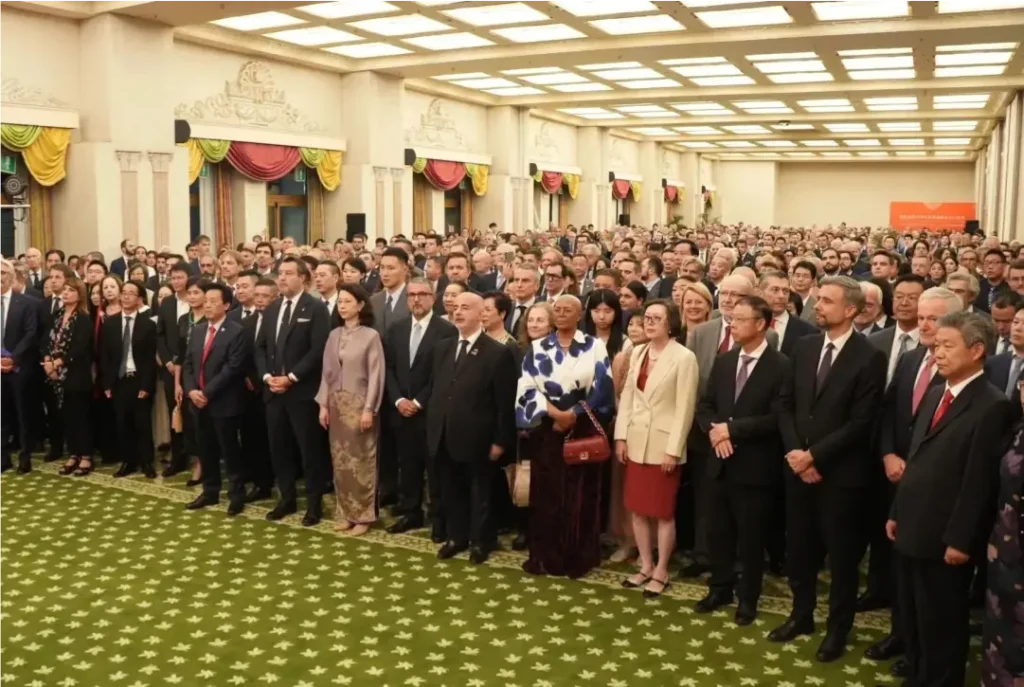
On September 28, Ivan Cardillo, Secretary-General of the Europe-China Economic Cooperation and Development Council (ECECDC), attended the reception celebrating the 77th anniversary of the founding of the People’s Republic of China. During the event, he held exchanges with Hou Yue, Chinese Ambassador to Italy, Zhang Lubiao, Chinese Permanent Representative and Ambassador to the UN Food and Agriculture Agencies, and Matteo Salvini, Deputy Prime Minister and Minister of Infrastructure and Transport of Italy. Qu Dongyu, Director-General of the Food and Agriculture Organization of the United Nations (FAO), and Álvaro Lario, President of the International Fund for Agricultural Development (IFAD), also attended the reception.
During the exchanges, Ambassador Hou Yue and Ambassador Zhang Lubiao fully recognized the efforts made by the ECECDC to promote friendly cooperation between China and Italy. The three parties will jointly advance economic and trade exchanges as well as pragmatic agricultural cooperation between the two countries, organize the China-Italy Agricultural Development Forum, and boost mutually beneficial and win-win development of the China-Italy comprehensive strategic partnership.
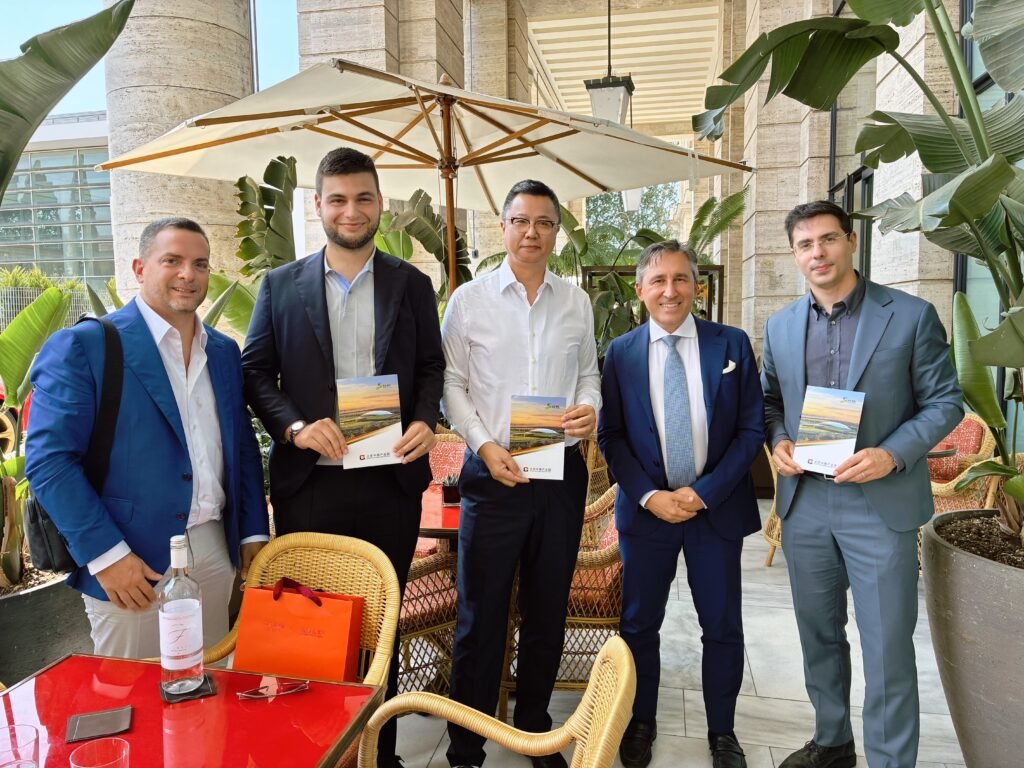
ROME, July 23 (local time) — Pan Feng, Chairman of the Europe-China Economic Cooperation and Development Council(ECECDC), held economic and trade talks in Rome with Renato Loiero, Economic Adviser to the Prime Minister of Italy, and Ivan Cardillo, Secretary-General of the ECECDC.
The three sides exchanged views on China–Italy economic and trade cooperation, the China–Europe Dialogue among Former Senior Officials, and the arrangements for major international events planned for the year.
During the talks, Pan Feng highlighted the Beijing Shunyi Airport Economic Zone, presenting its strengths as a high-level opening-up platform and its development potential in the convention and exhibition industry and cross-border trade. He encouraged the Italian side to leverage these opportunities, with a view to attracting high-quality Italian enterprises and resources to establish partnerships and deepen practical cooperation with Chinese counterparts.
On July 23, Zhou Xinjian, Central and Eastern Europe Representative of the Europe-China Economic Cooperation and Development Council (ECECDC) and Deputy Director of the EU Working Committee of the China-Europe Association for Technical and Economic Cooperation (CEATEC), attended the preparatory meeting of the Chinese Enterprises Chamber of Commerce in Slovakia as an invited guest and delivered remarks. Li Danghui, Commercial Counsellor of the Embassy of the People’s Republic of China in Slovakia, attended the meeting. Around 20 Chinese enterprises operating in Slovakia, including Gotion High-Tech, Huawei, and ZTE, participated in the meeting.
On June 18, 2026, Zhou Xinjian, Central and Eastern Europe Representative of the Europe-China Economic Cooperation and Development Council (ECECDC) and Deputy Director of the EU Working Committee of the China-Europe Association for Technical and Economic Cooperation (CEATEC), attended the IBIH Slovakia Plant Opening Ceremony with Li Danghui, Commercial Counsellor of the Embassy of the People’s Republic of China in the Slovak Republic. During the ceremony, Zhou Xinjian noted that the overseas plant represents a significant achievement of Chinese new energy materials enterprises investing in Europe. Since China and Slovakia established a strategic partnership in 2024, bilateral cooperation in new energy, intelligent manufacturing, and other sectors has accelerated. He added that the project will help strengthen Slovakia’s local industrial supply chain, create employment opportunities, and promote mutually beneficial industrial development between the two countries.
On 28 May 2026, John Clarke, Vice Chairman of the Europe-China Economic Cooperation and Development Council (ECECDC), Former Director of the International Relations Department, Directorate-General for Agriculture and Rural Development, European Commission; Expert in International Trade Negotiations and Geographical Indications, and an expert in international trade negotiations and geographical indications, was invited to attend the International Seminar “In Search of Common Ground: China-EU Economic Relations in Times of Global Disorder” in Xi’an, Shaanxi Province.
During the seminar, Clarke shared his reflections on his first visit to Xi’an in early 1984 and his return to the city today. Drawing on his personal experiences, he noted that European political and business communities need to visit China in person and gain a deeper understanding of the country’s development journey in order to adopt a more constructive, balanced and pragmatic approach towards China. The seminar featured in-depth discussions on the future direction of China-EU relations amid the adjustment of the global economic landscape, providing an important opportunity to enhance mutual understanding and trust and explore new areas for future cooperation.
On May 26, Pan Feng, President of the Europe-China Economic Cooperation and Development Council (ECECDC) and Vice Chairman of the China-Europe Association for Technical and Economic Cooperation (CEATEC), attended the China-Germany (China-Europe) Hidden Champions Forum 2026.
Li Baojie, Deputy District Mayor of Shunyi District, Beijing, and Giulio Borafi, First Counselor for Economic and Commercial Affairs at the Embassy of the Republic of Italy in China, attended the forum in person and delivered remarks. Renato Loyero, Advisor on Budget Policy to the Office of the Prime Minister of Italy and Advisor to the Senate of the Republic of Italy, as well as Paolo Grasso, Chief of Staff to Italian Deputy Prime Minister Matteo Salvini, delivered remarks via video.Participants held in-depth discussions on the directions and pathways for the coordinated development of small and medium-sized enterprises in China, Germany, and Europe, from the perspectives of national diplomatic strategies, regional openness and advantages, and industrial cooperation prospects, building consensus on openness and mutual benefit.
Building on the outcomes of the forum, the ECECDC will continue to strengthen its regular engagement with domestic and international enterprises and industry organizations, and promote deeper cooperation between more German and European hidden champions and China’s specialized, sophisticated, distinctive, and innovative enterprises in technological co-development, standard co-construction, and market sharing, helping Shunyi build a high-level hub for the clustered development of hidden champion and specialized, sophisticated, distinctive, and innovative enterprises from China, Germany, and Europe.
On May 26, the 7th China-CEEC Local Leaders’ Conference and the 2026 Shandong International Sister Cities Cooperation and Exchange Week officially opened in Jinan. The five-day event is themed “Walk Hand in Hand for a Shared Future”. Hosted by the People’s Government of Shandong Province and other relevant institutions, the conference has its main venue in Jinan and sub-venues in Binzhou, Linyi and Zibo. It brought together more than 600 Chinese and foreign guests from 44 countries, alongside 23 supporting special events focusing on economic and trade, science and education, and cultural and people-to-people exchanges. During the event, the articles of association of the federation were revised, and the Jinan Consensus was released.
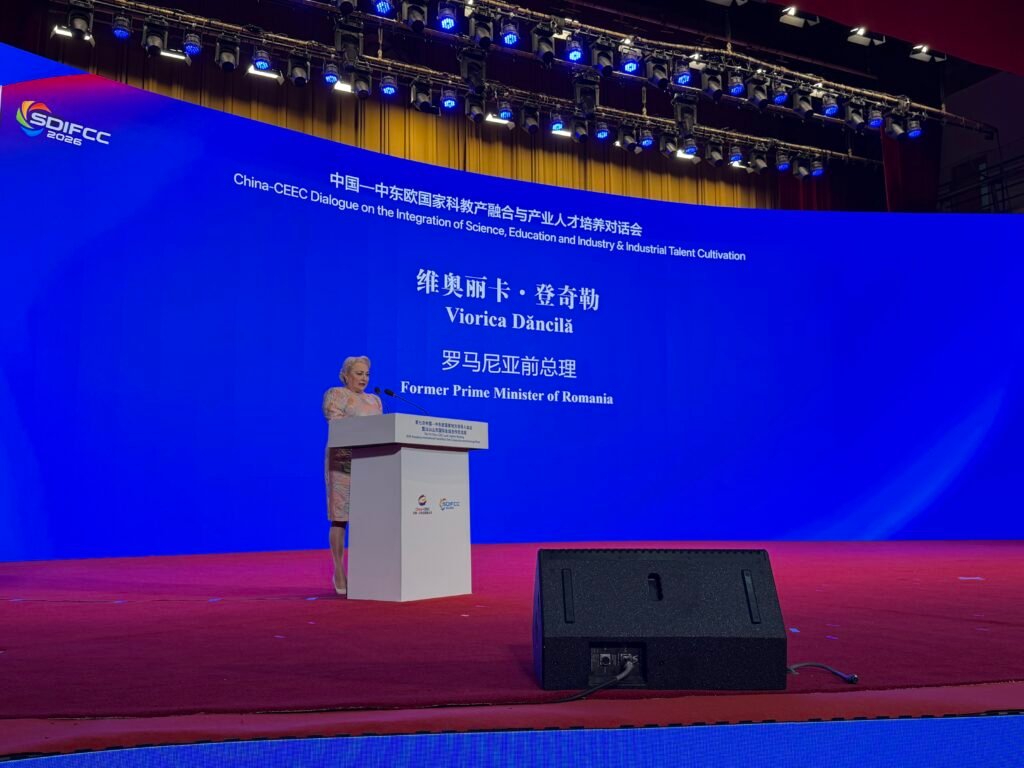
Viorica Dăncilă, Co-Chair of the Europe-China Council for Economic Cooperation and Development (ECECDC), former Prime Minister of Romania and President of the Romania-China Friendship House, attended the event and gave an interview. She stated that language connectivity serves as the foundation of cooperation, and Chinese language courses have been offered in numerous schools across Romania. Boasting prominent strengths in industry and agriculture, Shandong is well-positioned to deepen practical cooperation with Romania in modern agriculture, cultural tourism, education, green economy and other fields. She also called for continued two-way exchanges based on civil society platforms.
On May 22, 2026, Massimo D’Alema, Co-Chair of the Europe-China Economic Cooperation and Development Council (ECECDC) and Former Prime Minister of Italy, and Ivan Cardillo, Secretary-General of the ECECDC, attended the “Beijing’s Resilience” Panel held during the Trento Economics Festival.
D’Alema noted that against the backdrop of multiple global uncertainties and slowing growth in international trade, China’s economy has maintained steady development and continued to create new opportunities for global economic growth. Cardillo participated in the panel discussion, sharing his views on deepening China-Europe economic and trade exchanges and expanding practical cooperation. Participants agreed that amid adjustments in the global trade landscape and the transformation of industrial structures, China and Europe could tap into cooperation potential in areas such as green and low-carbon transition, the digital economy, technological innovation, and global governance, thereby expanding space for mutually beneficial cooperation.
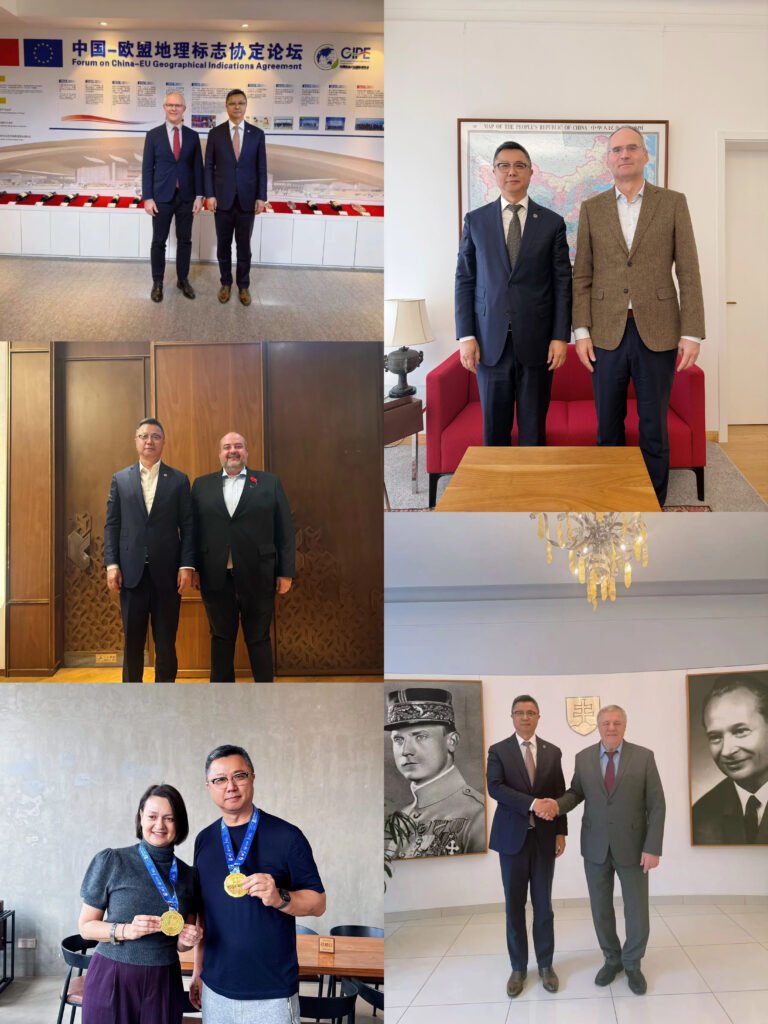
In the first quarter of 2026, Pan Feng, President of ECECDC, held a series of working meetings with ambassadors and consular representatives to China from Austria, Slovakia, Estonia, Croatia, and Romania, and also attended an international cultural and sports exchange event together with the Ambassador of Cyprus to China, reflecting growing momentum in China–Europe engagement. During the meetings, discussions focused on key areas including bilateral economic and trade relations, two-way investment promotion, and industrial cooperation. Particular emphasis was placed on sectors such as green energy, intelligent manufacturing, the automotive industry, and cultural and tourism cooperation, with all parties exploring practical pathways for collaboration and reaching broad consensus. In addition, both sides agreed to leverage high-level institutional platforms such as the China–Europe Business Leaders and Former Senior Officials Dialogue and the Global Geographical Indication Products Expo to further facilitate precise and efficient matchmaking between Chinese and European industries and enterprises.